
Will Your Sectional Sofa Fit Your New Home in Costa Rica?
Dan Chambers · November 27, 2026
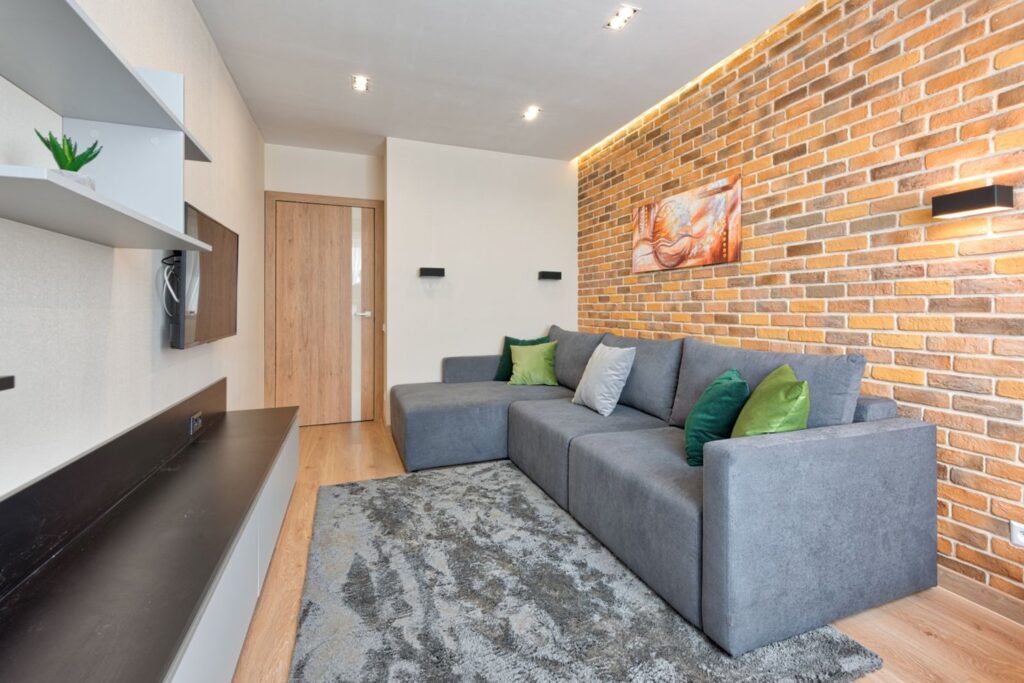
Before you ship a sectional sofa to Costa Rica, answer two separate questions. Can every rigid module get through the entrance and around the tightest turn? Once inside, can the modules connect in an arrangement that actually works in the room? A comfortable sofa can pass the first test and fail the second because the chaise blocks a door. Compare the complete layout and the individual packages before deciding whether the sectional deserves space in your move.
Make a Map of the Sofa You Own
Stand facing the sofa and draw its shape, including arms, corners, chaise, ottoman and any recliner. Mark the room entrance on the same drawing so another person understands your viewpoint. “Left-hand chaise” can mean something different to a person sitting on the sofa and a person looking at it. A quick sketch and a photograph avoid that ambiguity without requiring anyone to learn furniture industry terminology.
Give each module a letter. Mark which parts detach according to the manufacturer’s instructions, which backs are fixed, and which connectors need access from a particular side. Record whether cushions, legs and power adapters travel separately. A removable cushion changes the package differently from a fixed back frame. If a piece is powered, include its equipment and get manufacturer guidance for transport and use at the destination. Tell the packer about any battery rather than discovering it during collection.
Measure the Rigid Piece, Then the Package
Begin with the largest rigid part of each module. Measure length, depth and height and make a second set of measurements for the agreed transport configuration. State whether the legs have been removed and whether any arm, handle or bracket still projects. Keep a photograph beside the dimensions so the crew can match the number to the piece being discussed. The overall assembled width is useful to the homeowner but rarely describes the hardest object to get through a doorway.
Ask the packer for estimated outside measurements after protection. Suppose two modules each measure 1.30 by 0.95 by 0.80 meters in their wrapped condition. Together their rectangular envelopes occupy about 1.98 cubic meters. Add a wrapped corner measuring 0.95 by 0.95 by 0.80 meters and the total rises to about 2.70 cubic meters. This example excludes any separate carton of cushions. The calculation gives a space reference for the quote; it does not determine what the carrier will charge.
Test the New Room at Full Size
Get the inside dimensions of the destination room and draw the positions of doorways, windows, columns and fixed cabinets. If someone has access, ask them to lay out the sofa footprint with strips of paper. Include the chaise projection and the full reclined depth if a seat moves. Leave the outline in place long enough to open the patio door, walk from the kitchen to the bedrooms and pull chairs away from the dining table.
Suppose your Costa Rica rental has a wide living area but its terrace entrance is on the opposite side from your present home. The sofa can fit squarely against the wall while the chaise blocks the main route outdoors. Check whether your particular modules can reverse. Some systems use interchangeable seats while others have permanent arm positions or incompatible connectors. Test the proposed arrangement at origin if possible. That is easier than discovering the mistake with all the upholstery unwrapped at destination.
Trace the Delivery Route One Turn at a Time
Measure the clear opening of the outer door and the space opposite it. Look for a railing, stair landing, ceiling beam or right-angle turn between the entrance and the room. Provide the mover with measurements of the largest rigid module and photographs of the tightest locations. A narrow opening alone does not prove the sofa can or cannot pass. Orientation, turning room, protection and safe handling are part of a professional assessment.
If you are moving into a condominium, ask which entrance and lift the building allows for furniture. A passenger entrance in the property listing may differ from the service entrance actually available on moving day. Ask about doors that may be held open, floor protection and receiving appointments. If an alternate entry or special handling is proposed, get the manager’s approval and the mover’s assessment. Include any additional labor in the written proposal before relying on that option.
Protect the Fabric and Keep Hardware Together
Photograph visible wear, stains, loose seams and existing scuffs on feet or exposed frames. Label the photos with the module letters from your drawing. Ask how the packer will protect the specific fabric and prevent connectors on one piece from pressing into another. Note who is expected to remove and refit legs. If the sectional has been recently cleaned, ask the cleaner and packer to agree when the upholstery is ready to wrap.
Keep hardware in labeled packets tied to the inventory instead of placing loose fittings under cushions. Make a simple pairing note for each power lead or linking piece. At destination, count the modules before unpacking, then match hardware and cushions as you go. Keep the plan of the final layout available to the delivery team. It is much easier to put the corner in position first than to rearrange an entire room once the remaining cartons are stacked around it.
Compare the incremental household goods shipping cost with a local alternative that fits the same footprint and seating needs. Include packing, room placement, assembly and any separate delivery cost on a replacement. If only one module creates the problem, ask whether the remaining set can be used attractively on its own and whether leaving that module behind changes the quote. The best result is furniture that people can actually sit on and walk around in the home they are moving into.