
Receiving a Pallet in Costa Rica When There Is No Loading Dock
Dan Chambers · November 27, 2026
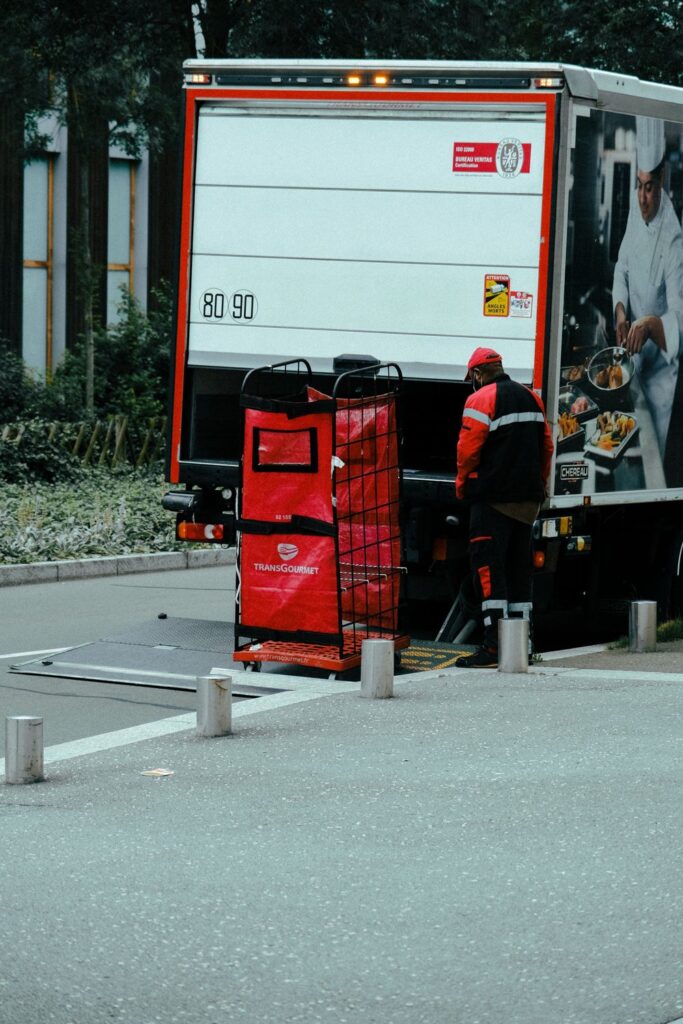
A residential address in Costa Rica can receive some pallet shipments without a loading dock, but only when the provider and receiver agree on an unloading method that fits the freight and the site. Start with the fully loaded pallet’s dimensions and gross weight, and follow it from the truck bed to the place where someone can safely take receipt. Ask for that exact handover point in the quote. “Delivery to the house” is too vague when the house sits beyond a gravel driveway.
Walk Through Three Possible Handovers
In the simplest case, the truck can stop on an approved level surface, its unloading equipment can handle the unit, and a suitable path connects the unload point to a covered area. Ask who supplies each piece of equipment and who is responsible for the move after the pallet leaves the truck. In a second case, the liftgate can lower the load but the next few meters consist of wet gravel and a threshold. There may be no suitable path for the pallet jack. Flag this before a vehicle is dispatched.
A third arrangement might use a nearby receiving warehouse that has the right equipment, followed by supervised delivery of smaller units. Ask whether the provider allows that arrangement, whether the goods can be broken down safely and who documents the change from one sealed pallet to multiple pieces. Include warehouse handling, onward transport, replacement packaging and extra labor when comparing the alternatives. A shorter journey on the map does not automatically make a residential handover cheaper.
Brief the Receiving Person
Give the receiver a picture of the finished pallet and its identifier, the agreed appointment and the contact for the transport provider. Tell them which tasks are included. They should never feel expected to lift a heavy unit by hand because a delivery vehicle has arrived without suitable equipment. Ask where the provider wants them to stand during unloading and when they should check the packaging. If the actual arrangement differs from the written plan, the receiver needs a contact authorized to pause, clarify or reschedule the handover.
Follow the Load All the Way Off the Truck
Distinguish the equipment that lowers a pallet from the vehicle from the equipment that moves it across the property. A liftgate may solve the first problem while leaving the pallet on a surface where a pallet jack cannot roll. Ask about equipment limits for the actual gross weight, width and length of the load. Check for steps, gravel, slopes, tight turns and thresholds between the unload point and storage. Send photos and let the provider determine whether another vehicle, different handling equipment or an alternate receiving point is needed. Agree who will be present to take control of the pallet once the quoted delivery service ends.
Work Out the Transfer Between Vehicles and the Property
Ask the provider what type of vehicle is planned for final delivery, where it can stop and how the freight reaches the agreed receiving point. If a smaller truck is proposed, specify who provides it, who transfers the load and where responsibility changes hands. Get the scope in writing, including any waiting or second-trip arrangement. Confirm the plan with someone who knows the property and the approach road. A street can be accessible to a private car but unsuitable for the vehicle or unloading equipment in the quote. On the day, keep the agreed space open and give the crew a way to contact the receiver before entering a road with limited turning space.
Photograph an Approach in the Order the Driver Will See It
Start at an identifiable public junction, then record each turn where a driver could reasonably go wrong. At the final approach, take one image facing the entrance and another looking back toward the road. Include landmarks that will still be visible when the vehicle arrives. Avoid sending a collection of uncaptioned close-ups that make a narrow bend look like an open driveway. Label each image with its direction and explain any seasonal changes you know about. The carrier needs to assess access and choose a safe vehicle or handover point. The photos are decision support for that conversation, not permission to drive through a route the driver considers unsuitable.
Consider the Exposed Part of the Handover
Trace the section of the job that happens outside, even if the goods travel inside a covered vehicle. Identify where cartons would stand while a lift is occupied, a gate is opened or a count is checked. Ask whether that space is covered and who can approve a different staging point if conditions change. Do not count on stretch wrap alone to make a load waterproof. Ask the packer what protection is appropriate for the contents and how it will be removed without losing labels. If unloading must pause, establish who can make that decision and where the goods can safely remain. Record actual conditions at delivery when they are relevant to the condition of the packaging.
Reconcile Units at the Right Level
Begin with the units the driver or warehouse actually hands over. A sealed pallet containing twelve cartons is one handling unit with twelve expected inner pieces. Record its identifier and visible condition first. Count cartons when the wrap can be removed in an appropriate area, then check the units inside each carton against the packing list. Put discrepancies at the level where you observed them. A shortage inside a sealed carton is different from a carton missing from an open pallet. Keep the associated labels, photos and documents together and ask the responsible party about its reporting process. Accurate counts give that party somewhere specific to begin its investigation.
Measure the receiving surface at the time of day you expect the truck. A driveway that looks clear on a Sunday may be used by neighboring businesses during delivery hours. Describe where the pallet can safely be set down and who has agreed to take over from that point. Confirm handling equipment directly with the provider.
For help with this shipment, review our pallet and shared-container services or request a written shipping quote.